
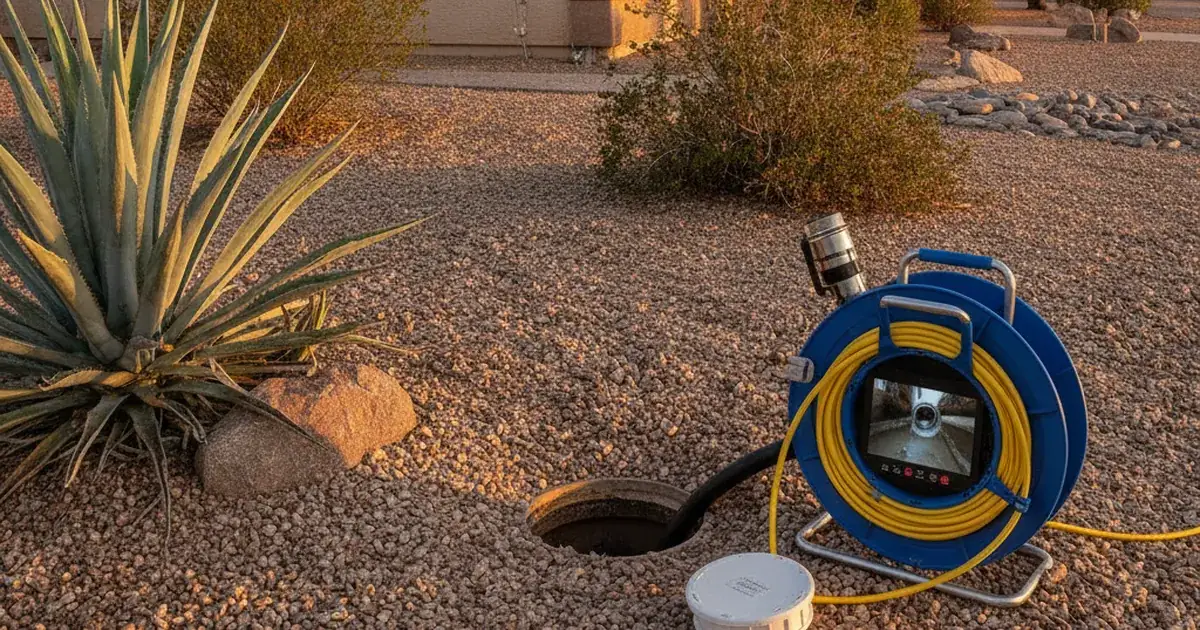
Repair your sewer line when the damage is limited to one or two sections and the rest of the pipe is sound. Replace it when the camera shows cracks, corrosion or sags along much of its length, because repeated spot repairs on a failing line usually cost more over time.
The only reliable way to know which one you have is to look inside the pipe. Everything below helps you read what the camera shows and compare quotes fairly.
Start With the Camera, Not the Quote
A sewer quote written without a camera inspection is a guess. Two homes with the same backup can have very different problems underground.
A camera inspection runs a waterproof camera through the line from a cleanout. It records the full run of pipe and shows where the trouble is and how deep it sits.
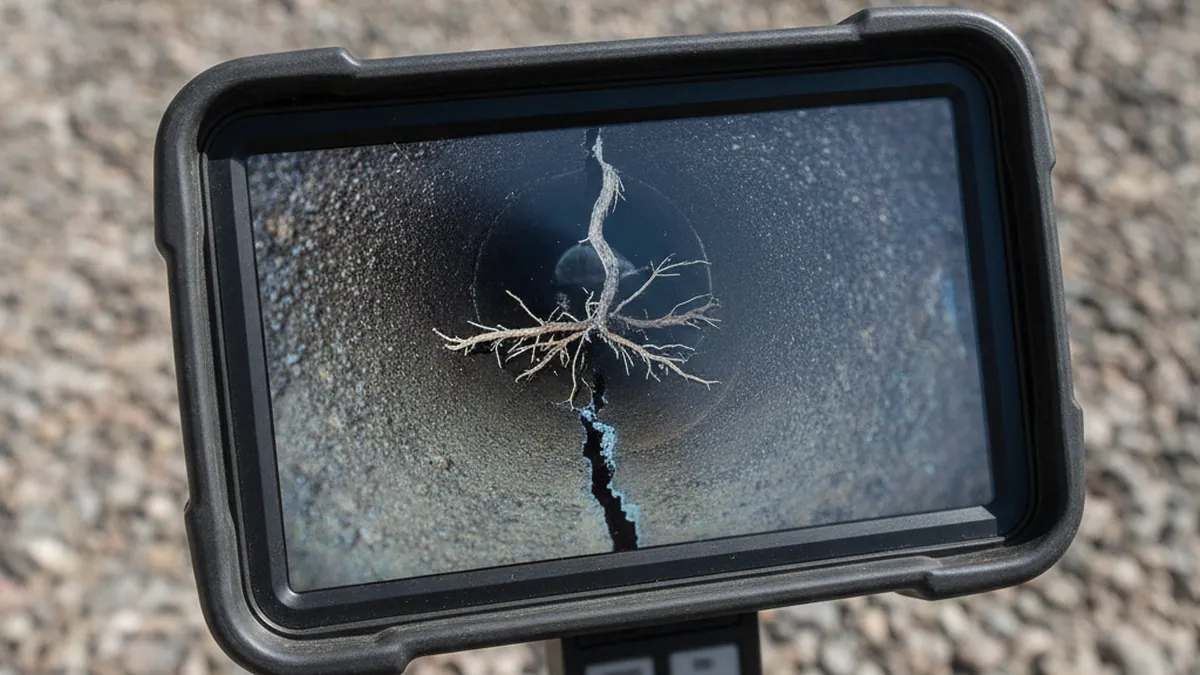
What the footage tells you
- One cracked joint or a root-filled joint. Often a good candidate for a section repair.
- A belly, where the pipe has sunk. Waste settles in the low spot. A short belly can be repaired; a long one points to replacement.
- Scale and corrosion along the whole line. Common in older cast iron. A repair fixes one spot while the rest keeps failing.
- Several breaks spread out. Each repair means another dig. Compare the total with replacing the line.
Ask to watch the footage with the plumber. You should see the problem yourself, not just hear about it. Our sewer camera inspection works that way.
When a Sewer Line Repair Makes Sense
Repair is the right call when the problem is local and the pipe around it is in good shape. It is the smaller job, and it keeps sound pipe in the ground.
Signs a repair should hold
- The camera shows one damaged section and clean pipe on either side.
- The trouble started recently, after years without backups.
- The damage is from something specific, like roots at a single joint.
- The line is newer PVC or ABS, which does not corrode the way cast iron does.
Roots are a common cause. As the Insurance Information Institute (Triple-I) explains, small roots work their way into sewer line cracks and pipe joints. Cutting the roots out clears the line for a while. Fixing the cracked joint removes the way in.
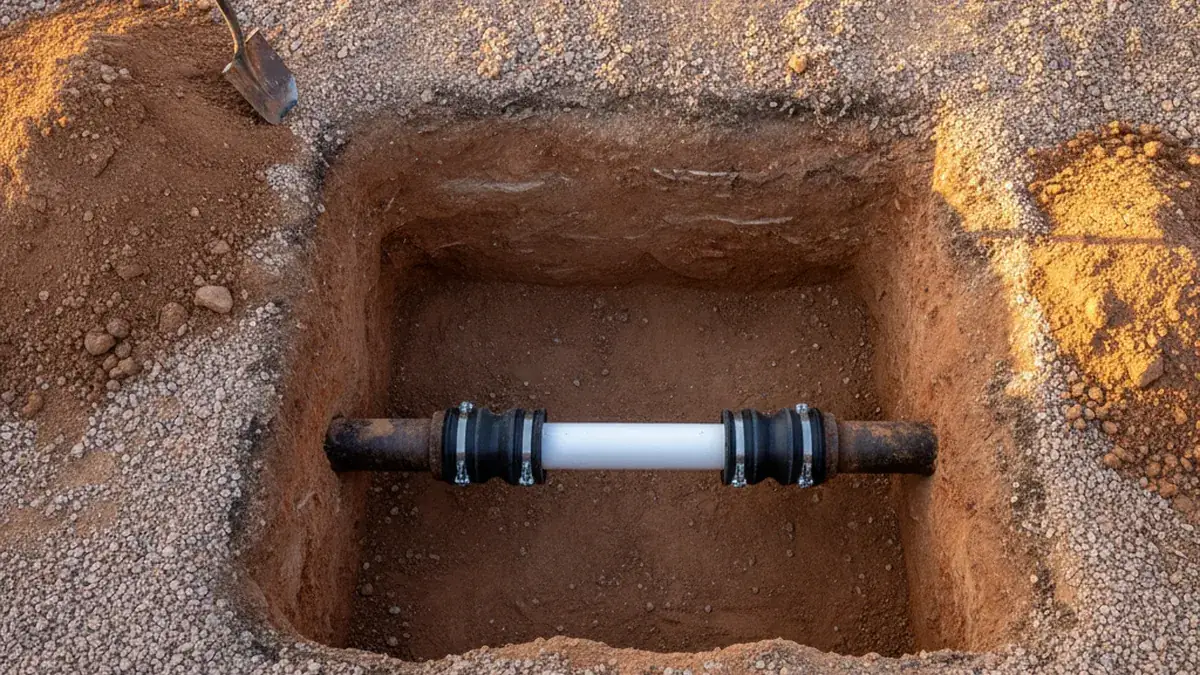
A good repair cuts out the damaged pipe, joins new pipe with the right fittings and sets it at the correct slope. Then the line is water-tested and filmed again before the hole is closed. See how we approach sewer line repair.
When Replacement Is the Better Spend
Replacement makes sense when the line is failing throughout. Patching one spot on a corroded pipe often moves the next backup a few feet down the line.
Signs you are past the repair stage
- The camera shows scale, cracks or flaking along most of the line.
- You have already paid for more than one repair on the same pipe.
- Backups keep coming back even after cleaning.
- The line has a long belly that holds water.
- The home was built before about 1980 and still has its original cast iron.
That last point matters in the East Valley. Much of north and central Tempe, South Scottsdale, west Mesa and north Chandler was built from the 1950s through the 1970s. Many of those homes still have original cast iron, which corrodes from the inside over decades. Most of Gilbert and Queen Creek is newer, so a full replacement there is less common.
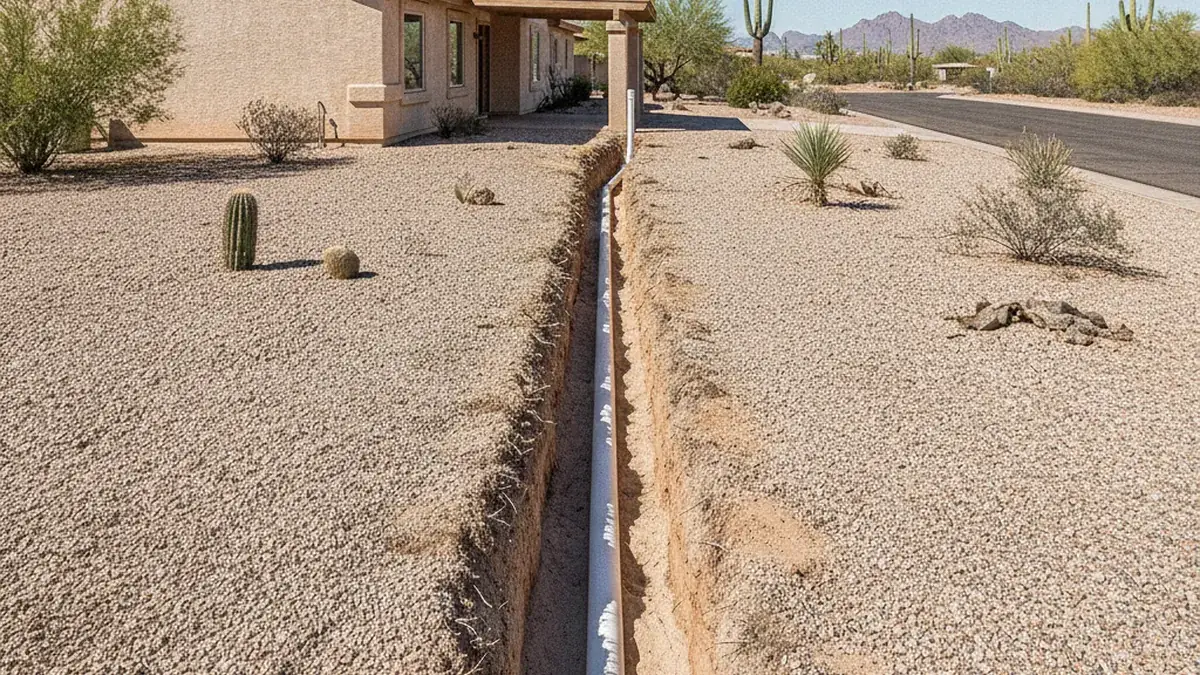
A full replacement is a bigger project. It is also one you do once. Our main sewer line replacement page explains how the job runs.
What Drives the Cost Either Way
We don't publish prices, because every sewer job depends on what the camera finds and what sits above the pipe. These are the factors that move the number most.
| Factor | Why it matters |
|---|---|
| Where the damage is | Open ground is simpler to reach than pipe under a slab or driveway |
| Depth of the pipe | Deeper pipe takes more digging to reach safely |
| What sits above it | Concrete, pavers and landscaping add work to open and restore |
| Number of problem spots | One repair is modest; several can approach the cost of replacement |
| Pipe material | Joining new pipe to old cast iron or clay takes the right fittings |
| Permits | Some sewer work needs one; Renova coordinates it for the plumbing scope |
The sewer line from your house to the main is usually the property owner's to maintain, as Triple-I notes. Check with your city for where that line ends at your address.
Questions to Ask Before You Sign
Two sewer quotes can look far apart and still describe different jobs. These questions help you compare them.
- Did you run a camera through the whole line, and can I see the footage?
- Where exactly is the damage, and how deep is it?
- Is the rest of the pipe sound enough for a repair to last?
- If you recommend replacement, what in the footage shows that?
- Is restoring the yard, concrete or landscaping included?
- Who coordinates the permit if one is needed?
- Will you water-test and film the line again before closing it up?
At Renova, you get a straight recommendation, including when the line only needs a repair. If diagnosing the problem needs tools, camera work, testing or disassembly, a diagnostic fee may apply. You get a clear estimate before any work begins.
Talk to a Local Sewer Plumber
If your drains keep backing up, find out what is actually in the pipe before you decide. Renova Plumbing & Drain serves Gilbert, Chandler, Mesa, Queen Creek, Tempe and Scottsdale. Call or text (602) 502-6843 or send us a message.